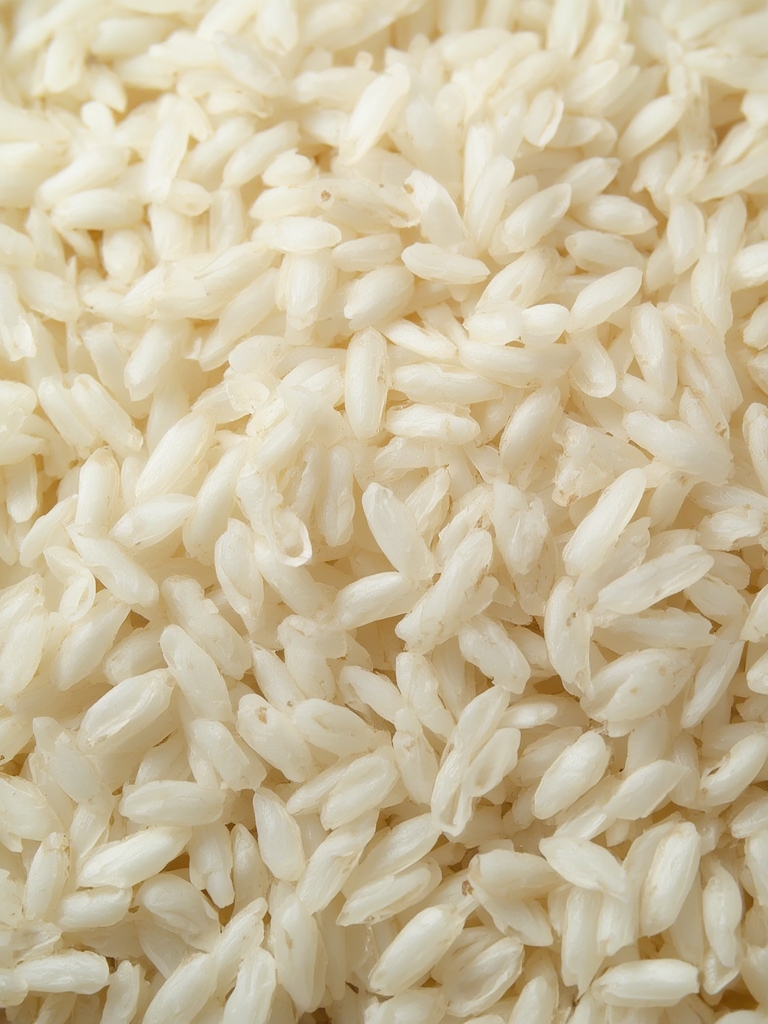

Have you ever wondered how that pristine white rice in your kitchen cabinet begins its journey? Growing your own white rice at home might seem daunting, but it’s a rewarding experience that connects you to one of humanity’s most essential food sources. As rice feeds over half the world’s population, understanding its cultivation process gives you a deeper appreciation for this humble grain. Whether you have a small garden plot or live in a suitable climate, growing white rice can be an educational and fulfilling project.
Table of Contents
Materials & Supplies
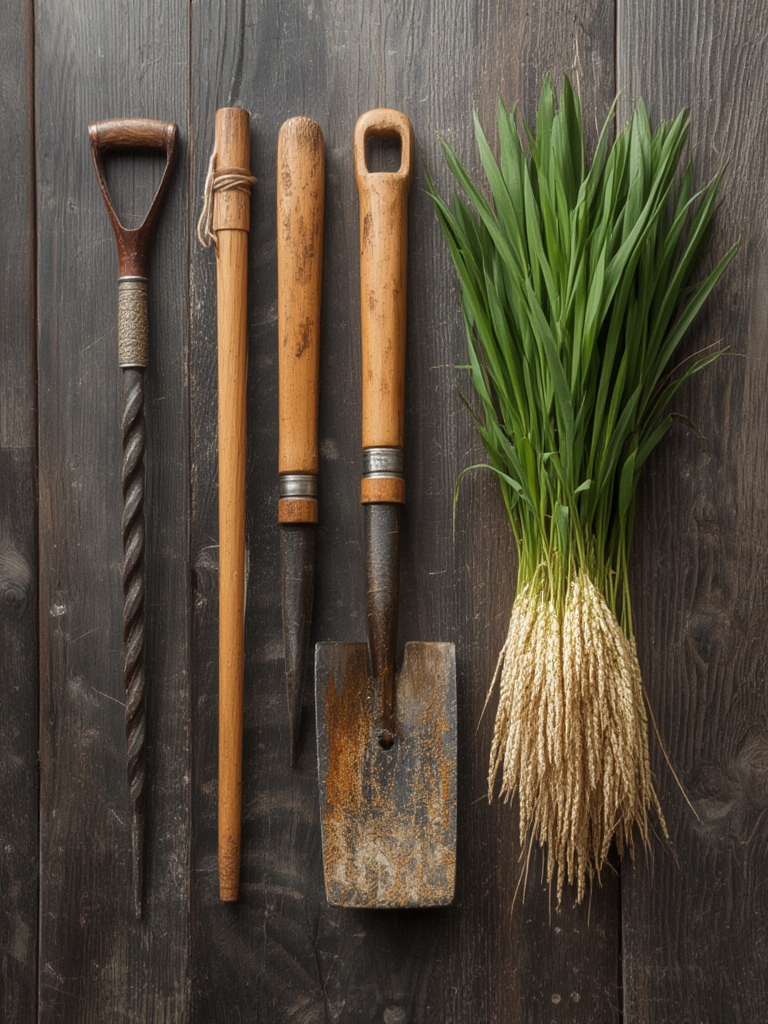
To begin your rice-growing journey, you’ll need:
- Rice seeds: Opt for short or medium-grain varieties for beginners
- Growing containers: Large, shallow containers at least 6 inches deep with drainage holes
- Growing medium: Clay-heavy soil or specialized rice paddy soil
- Water source: Rice requires constant moisture
- Fertilizer: Nitrogen-rich organic fertilizer
- Small shovel or trowel: For planting and maintenance
- Plastic sheeting: To create water-retention areas
- Netting or bird deterrents: To protect maturing grains
- Harvesting scissors or knife: For collecting mature rice stalks
Timing / Growing Schedule
Rice is a warm-season crop requiring 3-6 months from planting to harvest. Begin preparation in early spring, with planting occurring when temperatures consistently reach 70°F (21°C). Most varieties require approximately 120-180 days to reach maturity. Plan your growing schedule accordingly – if you live in USDA zones 8-10, you’ll have ample time for the full rice growth cycle. Cooler regions may require starting seeds indoors or selecting fast-maturing varieties.
Step-by-Step Instructions
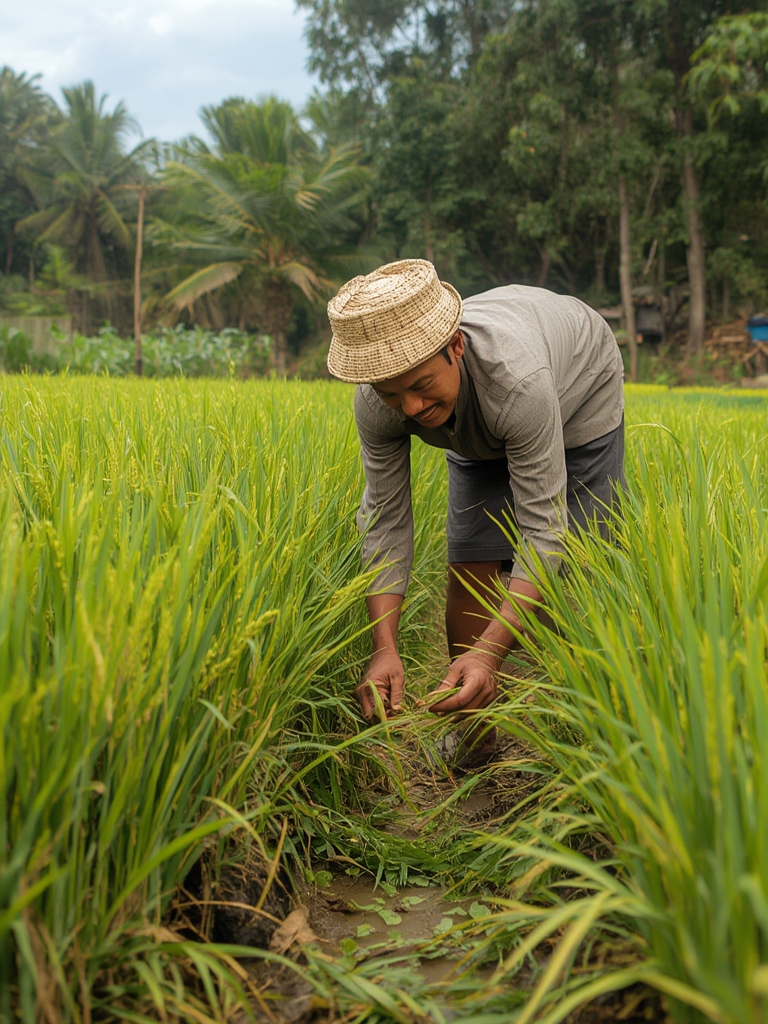
Prepare your growing area: Create a paddy-like environment by lining your growing area with plastic sheeting and adding 2 inches of gravel for drainage, then 6-8 inches of clay-rich soil.
Pre-soak seeds: Submerge rice seeds in water for 24-36 hours until they begin showing signs of sprouting.
Plant the seeds: Sow pre-soaked seeds about 1-2 inches apart and cover with a thin layer of soil.
Maintain water levels: Keep water levels at 2 inches above soil for the first month, then gradually increase to 4 inches as plants grow.
Provide nutrients: Apply nitrogen-rich fertilizer when plants reach 7-8 inches tall.
Monitor for flowering: After about 3-4 months, rice plants will flower and form grain heads.
Prepare for harvest: When grain heads turn golden and begin to droop, gradually reduce water levels.
Harvest: Cut stalks when grains are firm but not brittle, then hang in bundles to dry for 2-3 weeks.
Nutritional Benefits
Home-grown rice allows complete control over growing methods, eliminating concerns about pesticides or chemicals. Freshly harvested rice contains more nutrients than commercially processed varieties, including higher B-vitamin content and beneficial minerals like manganese and selenium. Additionally, growing rice creates habitat for beneficial insects and contributes to biodiversity in your garden ecosystem.
Tips and Alternative Methods
Container rice growing works well for limited spaces – use deep containers (at least 6 inches) with sealed bottoms to retain water. For indoor cultivation, provide 6-8 hours of direct sunlight or use grow lights. In drier climates, consider the “dry land” rice varieties that require less flooding. Companion planting with azolla (water fern) can reduce weed growth and provide natural nitrogen fixation.
Common Mistakes to Avoid
- Insufficient water: Rice requires consistent moisture throughout most of its growth cycle
- Planting too deep: Seeds should only be covered with a thin layer of soil
- Incorrect timing: Planting when temperatures are too cool leads to poor germination
- Neglecting bird protection: Birds can devastate a rice crop if left unprotected
- Harvesting too early: Immature grains will not process properly
Storage / Maintenance Tips
Store harvested rice in airtight containers in a cool, dry place after thorough drying. For longer-term storage, consider freezing for 48 hours to eliminate any pests before moving to permanent storage containers. Brown rice (unmilled) will store for 6 months, while properly milled white rice can last several years.
Conclusion
Growing white rice at home connects you with an ancient agricultural tradition while providing you with fresh, nutritious grain. Though it requires patience and attention to detail, the satisfaction of harvesting your own rice makes the effort worthwhile. Start small, be persistent, and enjoy the journey from seed to table. Have you tried growing rice at home? We’d love to hear about your experience in the comments!
FAQs
Can I grow rice in any climate?
Rice grows best in warm climates with temperatures between 70-90°F (21-32°C). Cooler regions require shorter-season varieties or indoor starting.
How much rice can I expect to harvest?
A 100 square foot area can yield approximately 10 pounds of rice, depending on variety and growing conditions.
Do I need standing water to grow rice?
Most varieties require flooding, but some “upland” varieties can grow with regular watering instead of standing water.
Is growing rice at home practical for food security?
While it’s educational and rewarding, rice requires significant space for meaningful yields. Consider it a supplementary crop rather than a staple food source for home gardens.