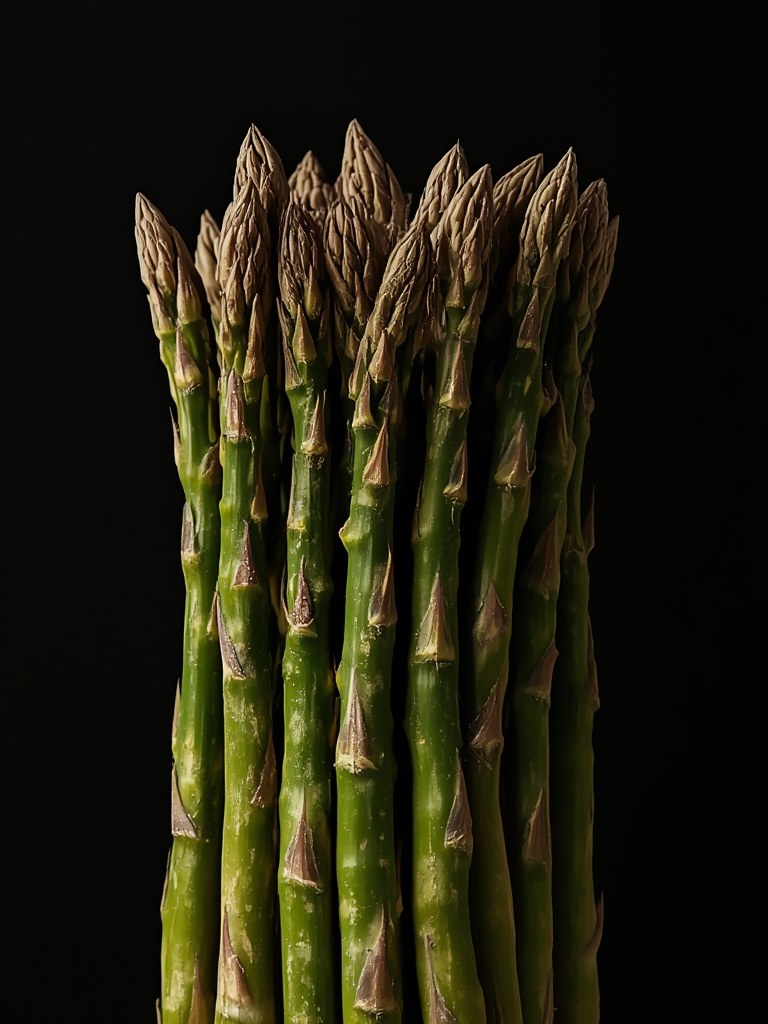

Are you tired of the flimsy asparagus spears from the grocery store that seem to wilt before you make it home? Growing your own asparagus might be the perfect solution for garden-fresh flavor and impressive harvests. As a perennial vegetable that can produce for 15-20 years, asparagus offers incredible value for home gardeners willing to invest a little patience upfront. With proper planting and care, you’ll be rewarded with tender, flavorful spears that put store-bought varieties to shame.
Table of Contents
Materials & Supplies
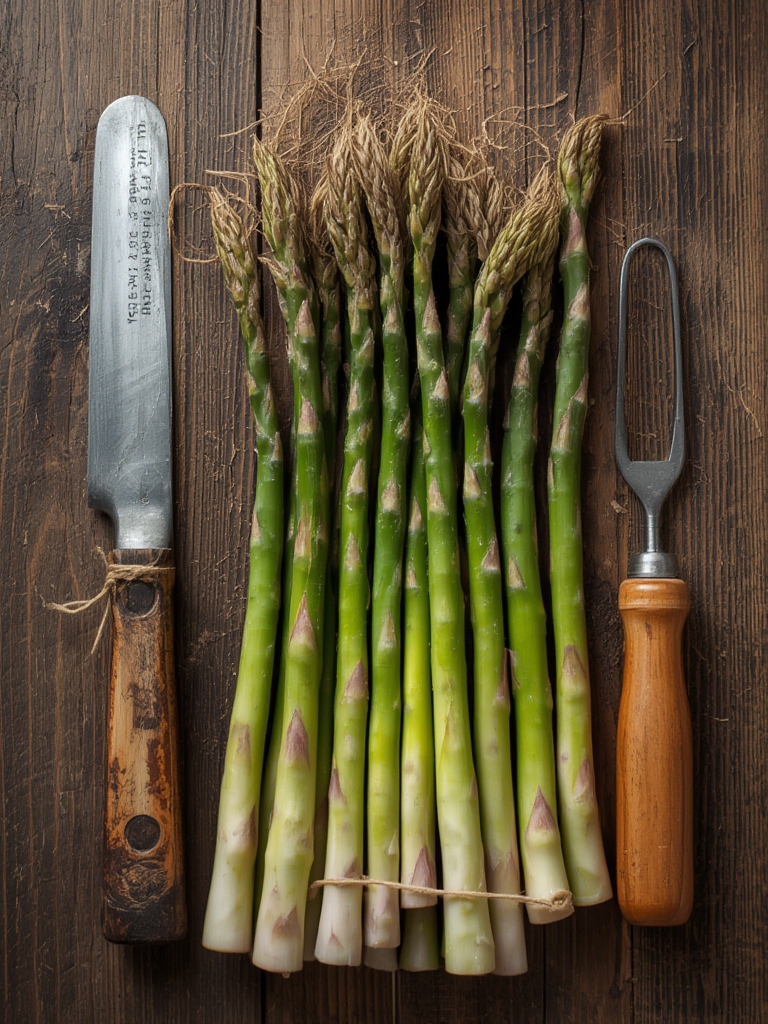
To start your asparagus journey, you’ll need:
- Asparagus crowns: One-year-old dormant plants with established root systems; ‘Jersey Knight,’ ‘Purple Passion,’ and ‘Mary Washington’ are reliable varieties
- Garden space: A permanent, sunny location with well-draining soil
- Compost or aged manure: 2-3 pounds per square foot for soil enrichment
- Balanced fertilizer: 10-10-10 formulation for established beds
- Garden spade and fork: For digging trenches and harvesting
- Mulch: Straw or shredded leaves to suppress weeds
- Garden twine and stakes: For supporting fern growth in summer (optional)
- pH testing kit: Asparagus thrives in soil with pH 6.5-7.5
Timing / Growing Schedule
Asparagus requires patience but rewards persistence. Plant crowns in early spring when soil temperatures reach 50°F. While you’ll need to wait 2-3 years before the first meaningful harvest, established beds will produce for two decades or longer. The typical growing schedule includes:
- Year 1: Establishment year – no harvesting
- Year 2: Limited harvest (1-2 weeks)
- Year 3 and beyond: Full harvest season (6-8 weeks)
Each spring, expect 8-10 weeks of active spear production before allowing the plants to develop ferns that recharge the roots for next year’s crop.
Step-by-Step Instructions
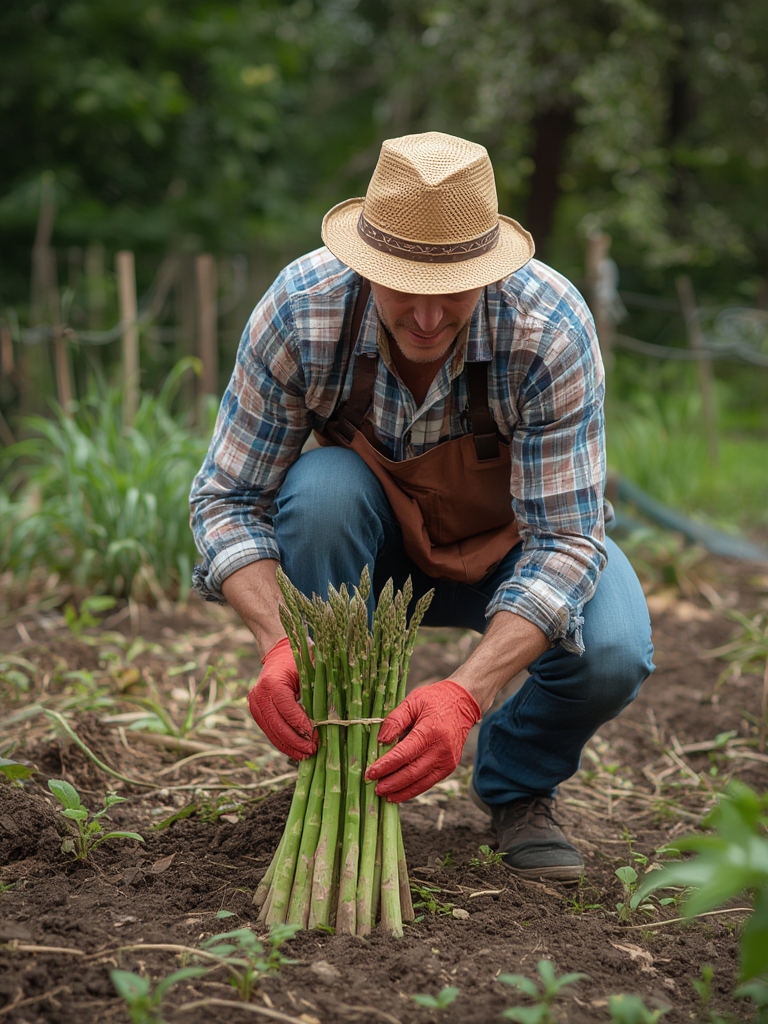
Choose the perfect location: Select a permanent spot with full sun and well-draining soil. Asparagus will remain productive for 15+ years, so choose wisely!
Prepare the soil: Dig a trench 12 inches deep and 12-18 inches wide. Mix the removed soil with compost or aged manure to improve fertility and drainage.
Create planting mounds: Form 6-inch high mounds every 18 inches along the trench bottom. This improves drainage around crowns and prevents rot.
Place crowns carefully: Set each crown on a mound with roots spread outward like octopus tentacles, ensuring the buds face upward.
Backfill gradually: Cover crowns with 2 inches of amended soil initially. As spears grow, add more soil until the trench is filled, usually over 4-6 weeks.
Mulch thoroughly: Apply 2-3 inches of mulch between rows to suppress weeds and maintain moisture, keeping mulch away from crown centers.
Nutritional Benefits
Asparagus is nutritionally dense, containing just 20 calories per serving while providing 57% of daily vitamin K needs and 34% of folate requirements. It’s rich in antioxidants, particularly glutathione, which helps fight oxidative stress. Asparagus also contains inulin, a prebiotic fiber that supports gut health by feeding beneficial bacteria.
Tips and Alternative Methods
- Container growing: While not ideal, select containers at least 20 inches deep with drainage holes, using one crown per 5-gallon container
- White asparagus: For this delicacy, mound soil around emerging spears to prevent chlorophyll development
- Companion planting: Grow with tomatoes, parsley, and basil, which repel asparagus beetles
- Winter care: In cold regions, cut foliage to 2 inches after it yellows and cover beds with 4-6 inches of straw mulch
Common Mistakes to Avoid
- Harvesting too soon: Resist cutting any spears in the first year; limited harvest in year two
- Insufficient watering: Provide 1-2 inches weekly during establishment and dry periods
- Weed competition: Keep beds meticulously weeded; asparagus struggles against competition
- Salt remedies: Despite folklore, table salt damages soil structure and doesn’t selectively kill weeds
Storage / Maintenance Tips
Maintain your asparagus bed by applying 1-2 inches of compost annually in early spring. Fertilize after harvest season with a balanced fertilizer. For storage, stand freshly harvested spears upright in one inch of water in the refrigerator, or blanch and freeze for long-term preservation.
Conclusion
With proper planting and care, homegrown asparagus delivers unmatched flavor and incredible value over its decades-long productive life. Though it requires patience initially, few garden investments offer better returns. Start your asparagus bed this spring, and you’ll enjoy bountiful harvests for years to come. Share your asparagus growing tips or questions in the comments below!
FAQs
How long until I can harvest asparagus after planting?
Wait until the third year for full harvests. Taking spears too early weakens plants and reduces long-term productivity.
Should I start from seed or crowns?
Crowns give you a 1-2 year head start. Seeds require additional growing time and more intensive care during establishment.
How do I know when asparagus is ready to harvest?
Harvest spears when they’re 6-8 inches tall and before the tips begin to open or “fern out.”
Can asparagus grow in partial shade?
While asparagus prefers full sun, it can tolerate partial shade but will produce fewer, thinner spears.