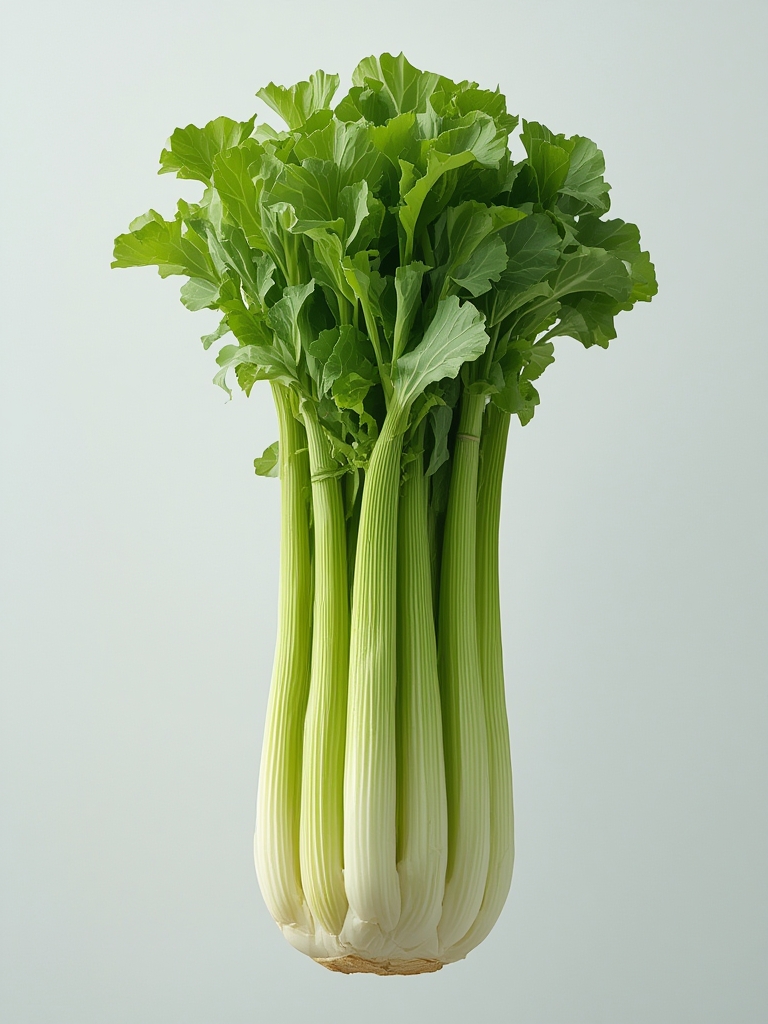

Have you ever reached for a stalk of grocery store celery and winced at its price tag? Growing your own celery can be both rewarding and economical. This crisp, versatile vegetable adds flavor to soups, salads, and snacks while providing impressive nutritional benefits. Although celery has a reputation for being challenging to grow, with the right approach, you can successfully cultivate this nutrient-rich plant right in your own garden. Let’s explore how to grow celery from seed to harvest, breaking down this seemingly complex process into manageable steps.
Table of Contents
Materials & Supplies
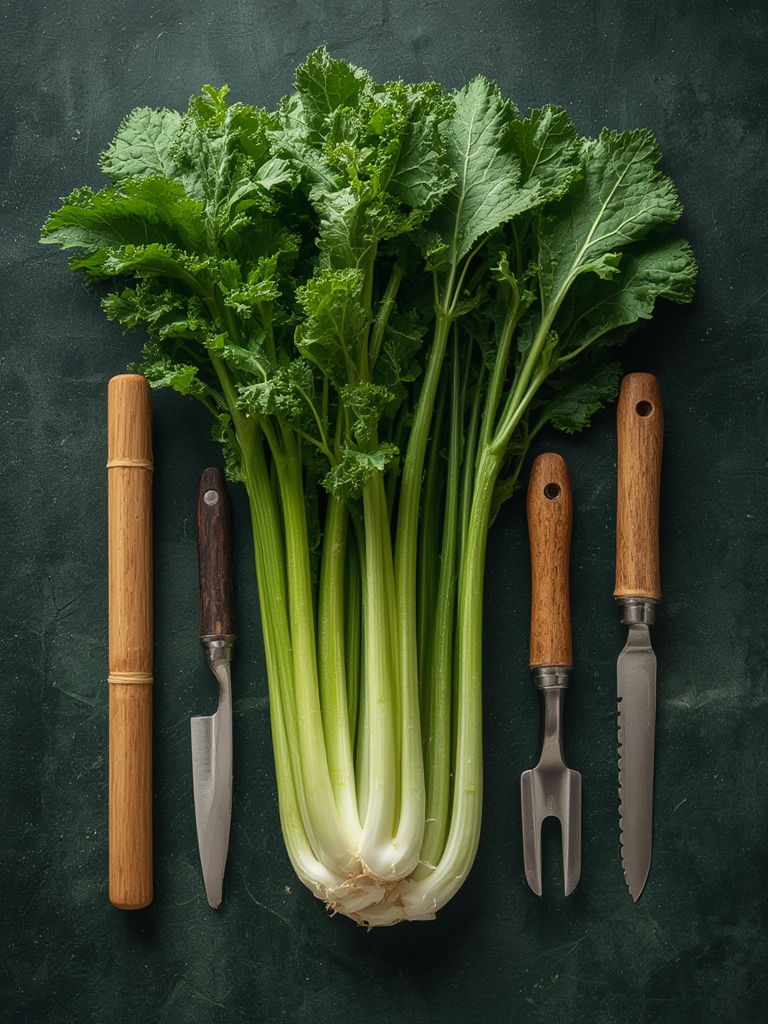
To start your celery growing journey, gather these essential items:
- Celery seeds – Choose high-quality, disease-resistant varieties appropriate for your climate
- Seed-starting trays – Small cells with drainage holes work best
- Seed-starting mix – Lightweight, sterile soil designed for germination
- Potting soil – Rich in organic matter for transplanting
- Plant fertilizer – Balanced, water-soluble fertilizer (10-10-10)
- Watering can – With fine spray nozzle for gentle watering
- Garden bed or containers – Minimum 8 inches deep with good drainage
- Mulch – Straw or shredded leaves to retain moisture
- Row covers (optional) – For protection in colder regions
- pH testing kit (optional) – Celery prefers slightly acidic soil (6.0-6.8 pH)
Timing / Growing Schedule
Celery requires a long growing season of 120-140 days from seed to harvest. Start seeds indoors 10-12 weeks before your last spring frost date. Plan to transplant seedlings outdoors 2-3 weeks after the last frost when soil temperatures reach at least 50°F (10°C). For fall harvests, start seeds in early summer. Compared to other garden vegetables, celery’s timeline is similar to tomatoes but longer than radishes or lettuce, requiring patience and planning.
Step-by-Step Instructions
Seed preparation: Soak celery seeds in warm water overnight to improve germination rates. This breaks down the seed’s natural germination inhibitors.
Sowing seeds: Sprinkle seeds on the surface of moist seed-starting mix—don’t bury them as they need light to germinate. Press gently to ensure seed-to-soil contact.
Provide optimal conditions: Maintain temperatures between 70-75°F (21-24°C) and cover trays with plastic wrap to create a greenhouse effect. Place under grow lights or in a sunny window.
Monitor germination: Seeds should sprout within 7-14 days. Remove plastic covering once seedlings emerge and ensure lights remain 2-3 inches above plants.
Care for seedlings: Water from the bottom to prevent damping-off disease. Once seedlings develop true leaves, thin to one plant per cell.
Hardening off: Two weeks before transplanting, gradually acclimate seedlings to outdoor conditions by placing them outside for increasingly longer periods.
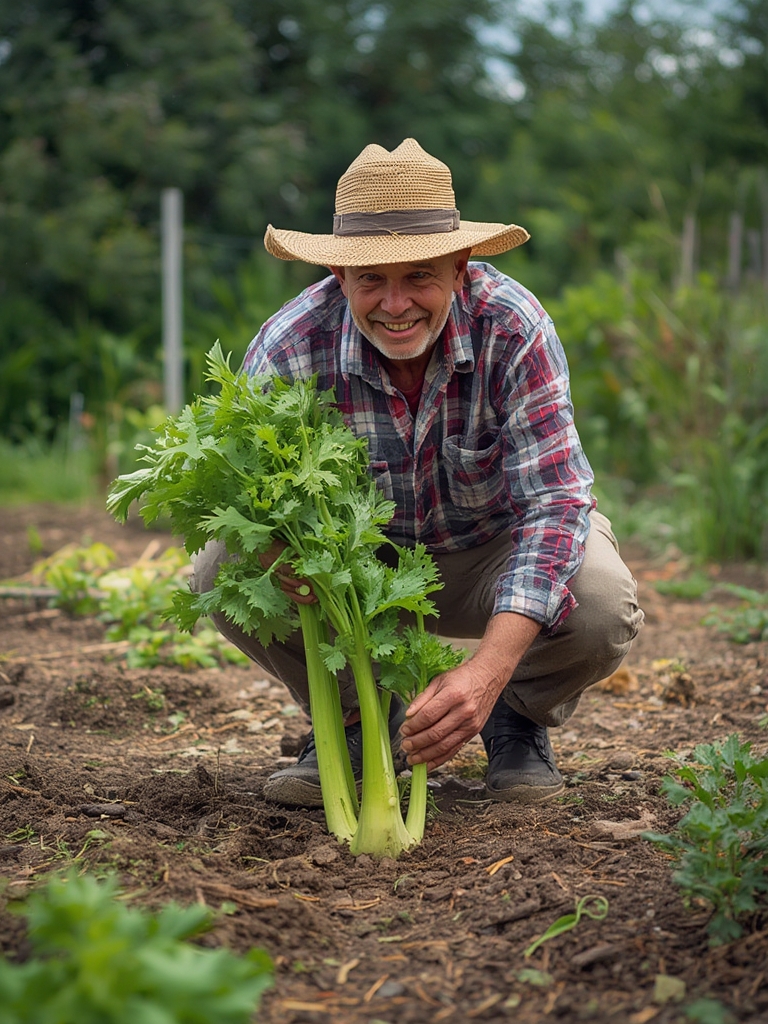
Transplanting: Plant celery seedlings 8-10 inches apart in rows 24 inches apart. Plant at the same depth as they grew in containers.
Ongoing care: Keep soil consistently moist—never let it dry out completely. Apply balanced fertilizer every 2-3 weeks.
Nutritional Benefits
Homegrown celery provides exceptional nutritional value. Rich in vitamins A, K, and C, celery contains potent antioxidants and anti-inflammatory compounds. It’s an excellent source of dietary fiber and contains minerals like potassium and folate. Home-grown celery typically contains fewer pesticides and offers stronger flavor than store-bought alternatives.
Tips and Alternative Methods
Consider these growing variations:
- Container growing: Use deep pots at least 8 inches wide and 10 inches deep for individual plants.
- Trench method: Plant celery in 8-inch deep trenches, gradually filling in soil around stalks as they grow to blanch them.
- Indoor growing: Celery can thrive on bright windowsills or under grow lights year-round.
- Companion planting: Grow alongside onions, cabbage, or bush beans, which deter pests that typically affect celery.
Common Mistakes to Avoid
- Insufficient watering: Celery needs consistent moisture—install drip irrigation or use self-watering containers if you’re forgetful.
- Planting too deep: Seeds need light to germinate; seedlings should be planted at the same depth they grew in containers.
- Inadequate fertilization: Celery is a heavy feeder—implement a regular feeding schedule to avoid nutrient deficiencies.
- Exposing to heat: Temperatures above 85°F (29°C) can cause bolting—provide afternoon shade in hot climates.
Storage / Maintenance Tips
Harvest outer stalks first, allowing inner stalks to continue developing. Store harvested celery wrapped in foil in the refrigerator for up to two weeks. For longer preservation, blanch and freeze stalks, or dehydrate for celery powder. During growth, blanch stalks by wrapping lower portions in paper or cardboard two weeks before harvest for milder flavor and paler color.
Conclusion
Growing celery requires patience and attention to detail, but the crisp, flavorful stalks you’ll harvest make the effort worthwhile. With proper planning, consistent care, and the right growing conditions, you can enjoy this nutrient-dense vegetable straight from your garden. Ready to get started? Grab your seeds and let your celery-growing adventure begin! Share your celery growing experiences in the comments below.
FAQs
How long does celery take to grow from seed to harvest?
Celery typically requires 120-140 days from seed to harvest, making it one of the longer-season vegetables in the home garden.
Can I regrow celery from kitchen scraps?
Yes! Place the base of a celery bunch in a shallow dish of water until roots and new growth appear, then transplant to soil.
Why are my celery stalks thin and stringy?
Thin, stringy stalks usually result from inconsistent watering, high temperatures, or nutrient deficiencies. Maintain even soil moisture and regular fertilization.
Does celery need full sun?
Celery prefers full sun in cool climates but benefits from afternoon shade in warmer regions where temperatures regularly exceed 80°F (27°C).
Is celery frost-tolerant?
Mature celery can withstand light frosts but should be protected when temperatures drop below 28°F (-2°C). Young seedlings are more sensitive to cold.