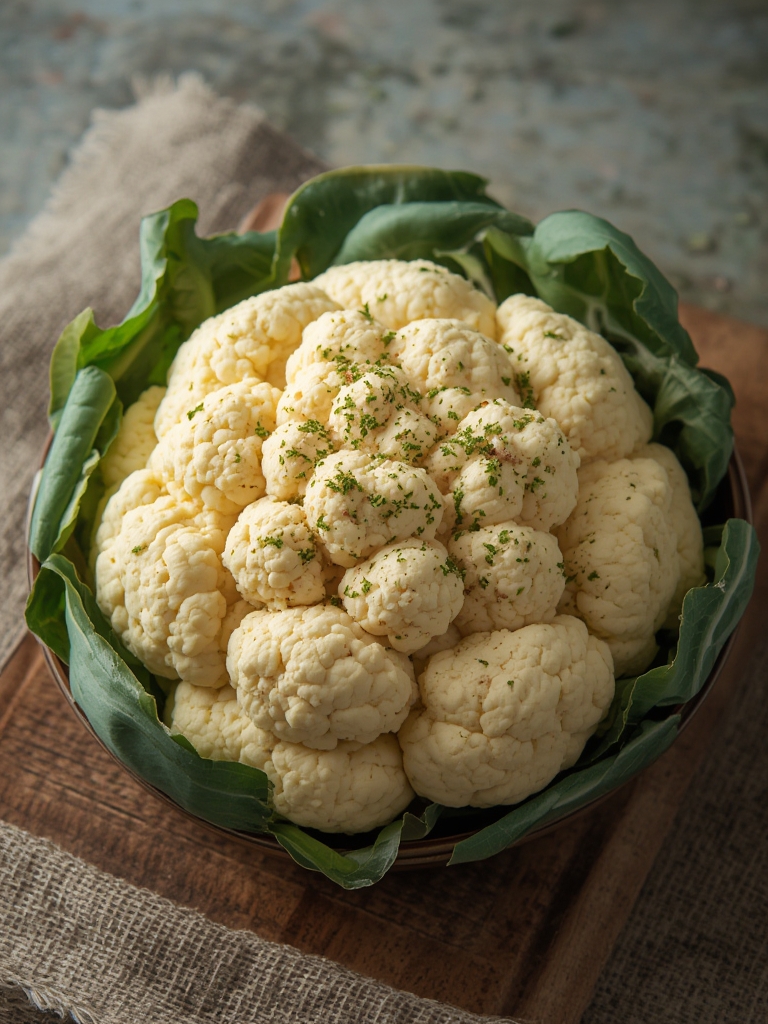

Have you ever bitten into a homegrown cauliflower with its sweet, nutty flavor and perfect texture? Growing your own cauliflower can be incredibly rewarding, though many gardeners find achieving those picture-perfect, densely packed white heads challenging. While cauliflower has a reputation for being somewhat finicky, with the right approach and attention to detail, you can harvest restaurant-quality cauliflower right from your backyard. Let’s explore how to grow this nutritious cruciferous vegetable successfully, ensuring you get those firm, perfect heads that make your gardening efforts worthwhile.
Table of Contents
Materials & Supplies
To start your cauliflower growing journey, gather these essential items:
- Cauliflower seeds or seedlings: Choose varieties suited to your climate (like ‘Snow Crown’ for beginners or ‘Snowball’ for cooler regions)
- Nutrient-rich soil: Cauliflower thrives in well-draining, fertile soil with pH 6.0-7.0
- Organic compost: For soil amendment
- Complete fertilizer: Balanced NPK (nitrogen, phosphorus, potassium) ratio like 10-10-10
- Garden bed or containers: At least 12-15 inches deep
- Mulch: Straw, wood chips, or compost to retain moisture
- Row covers or shade cloth: To protect young plants from extreme temperatures
- Watering can or irrigation system: For consistent moisture delivery
- Garden twine: For blanching (optional)
- Rubber bands or clips: Alternative for blanching
Timing / Growing Schedule
Cauliflower is a cool-season crop that performs best when maturing in temperatures between 55-70°F (13-21°C). For spring harvest, start seeds indoors 4-6 weeks before the last frost date. For fall harvest (generally more successful), sow seeds 10-12 weeks before the first expected fall frost. From transplant to harvest typically takes 55-100 days, depending on variety and growing conditions. This is longer than broccoli (50-65 days) but shorter than most cabbage varieties (80-180 days).
Step-by-Step Instructions
Prepare your growing area: Work compost into your soil to a depth of 8-10 inches. Cauliflower needs fertile, well-draining soil with consistent moisture. Add lime if your soil pH is below 6.0.
Start seeds indoors: Sow seeds ¼ inch deep in seed-starting mix. Keep soil moist and maintain temperatures around 70°F (21°C) until germination, which typically occurs in 5-10 days.
Harden off seedlings: One week before transplanting, gradually introduce seedlings to outdoor conditions for increasing periods each day.
Transplant carefully: Space plants 18-24 inches apart in rows 30 inches apart. Plant on a cloudy day or in the evening to reduce transplant shock.
Water consistently: Provide 1-1.5 inches of water weekly. Inconsistent watering leads to button heads or bitter taste. Morning watering reduces disease risk.
Fertilize appropriately: Side-dress with balanced fertilizer when plants are 4 inches tall and again when they begin forming heads.
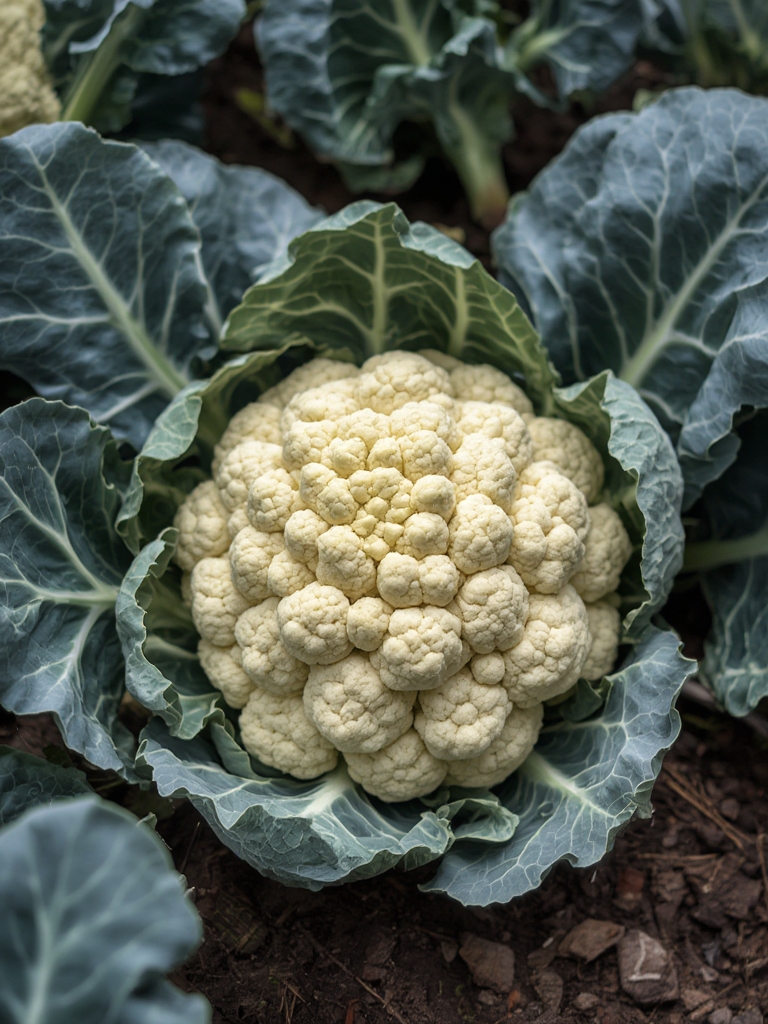
Blanch the heads: When heads are about 2-3 inches in diameter, gently fold larger outer leaves over the developing head and secure with twine or rubber bands. This protects the cauliflower from sunlight, ensuring white heads.
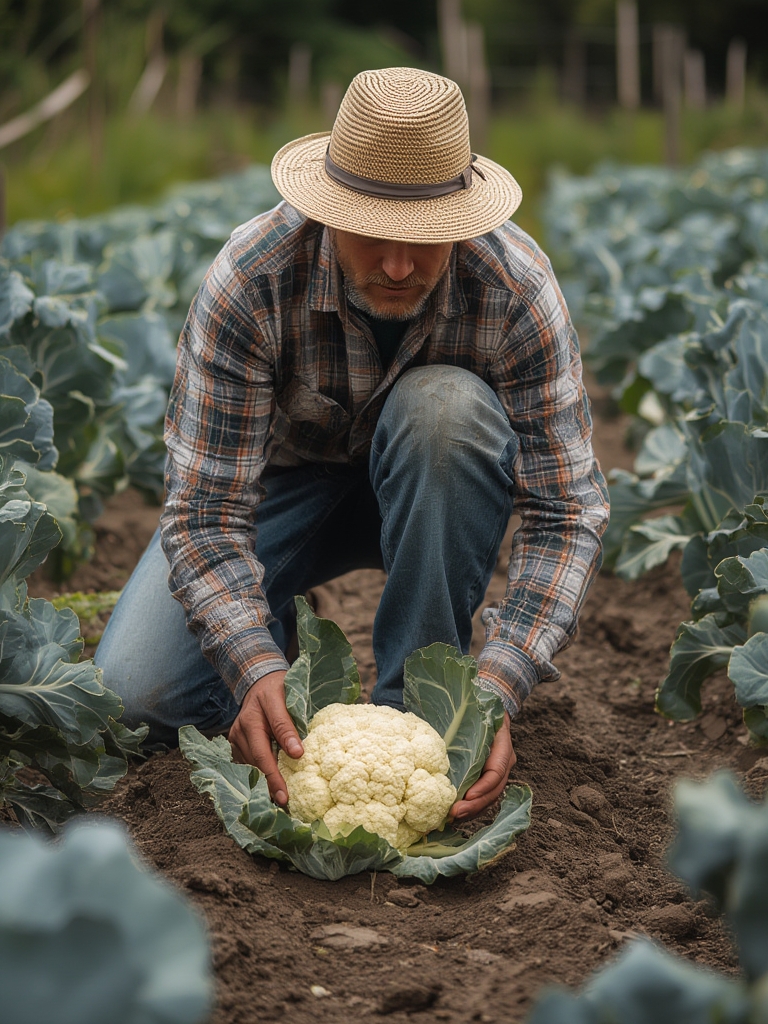
Harvest at peak quality: Cut heads when they’re firm, compact, and 6-8 inches in diameter. Don’t delay harvest once they’re ready!
Nutritional Benefits
Homegrown cauliflower offers impressive nutritional value. It’s exceptionally high in vitamin C (77% of daily value per cup), rich in vitamin K, and provides a good source of folate, vitamin B6, and potassium. It contains cancer-fighting compounds called glucosinolates and is low in calories but high in fiber, making it perfect for weight management diets.
Tips and Alternative Methods
- Container growing: Choose containers at least 12 inches deep and 12-18 inches wide per plant.
- Succession planting: Stagger plantings 2-3 weeks apart for continuous harvest.
- Companion planting: Grow with herbs like dill and chamomile which repel pests.
- Colored varieties: Try purple, orange, or green cauliflower varieties which are often easier to grow as they don’t require blanching.
- Cold frame growing: Extend your season using cold frames in early spring or late fall.
Common Mistakes to Avoid
- Inconsistent watering: Results in stressed plants and poor head formation.
- Planting too late in spring: Hot weather causes buttoning (small, button-sized heads).
- Skipping blanching: For white varieties, failing to blanch leads to yellowish, off-flavor heads.
- Crowding plants: Insufficient spacing reduces air circulation and promotes disease.
- Ignoring pests early: Address cabbage worms, aphids, and slugs promptly with organic controls.
Storage / Maintenance Tips
Store harvested cauliflower unwashed in a perforated plastic bag in the refrigerator for up to two weeks. For long-term storage, blanch florets for 3 minutes, cool immediately in ice water, drain well, and freeze in airtight containers for up to 12 months.
Conclusion
Growing cauliflower with firm, perfect heads requires attention to timing, consistent care, and proper technique, but the results are well worth the effort. The superior flavor and nutritional benefits of homegrown cauliflower make it a valuable addition to any vegetable garden. Start with the right varieties for your climate, maintain consistent growing conditions, and you’ll soon be enjoying picture-perfect cauliflower that outshines anything you can find in stores.
FAQs
Why are my cauliflower heads small or button-sized?
Button heads typically result from stress during growth—usually temperature fluctuations, drought, or nutrient deficiencies. Maintain consistent moisture and temperature for better results.
Can I grow cauliflower indoors?
Yes, with sufficient light (16 hours daily from grow lights), proper containers (at least 12 inches deep), and cool temperatures (60-70°F), cauliflower can be grown indoors.
Do all cauliflower varieties need blanching?
No, colored varieties (purple, orange, green) don’t require blanching. Only white varieties need protection from sunlight to prevent yellowing.
How can I protect my cauliflower from pests organically?
Use floating row covers to prevent cabbage moth egg-laying, introduce beneficial insects like ladybugs for aphid control, and apply diatomaceous earth around plants to deter slugs and snails.